



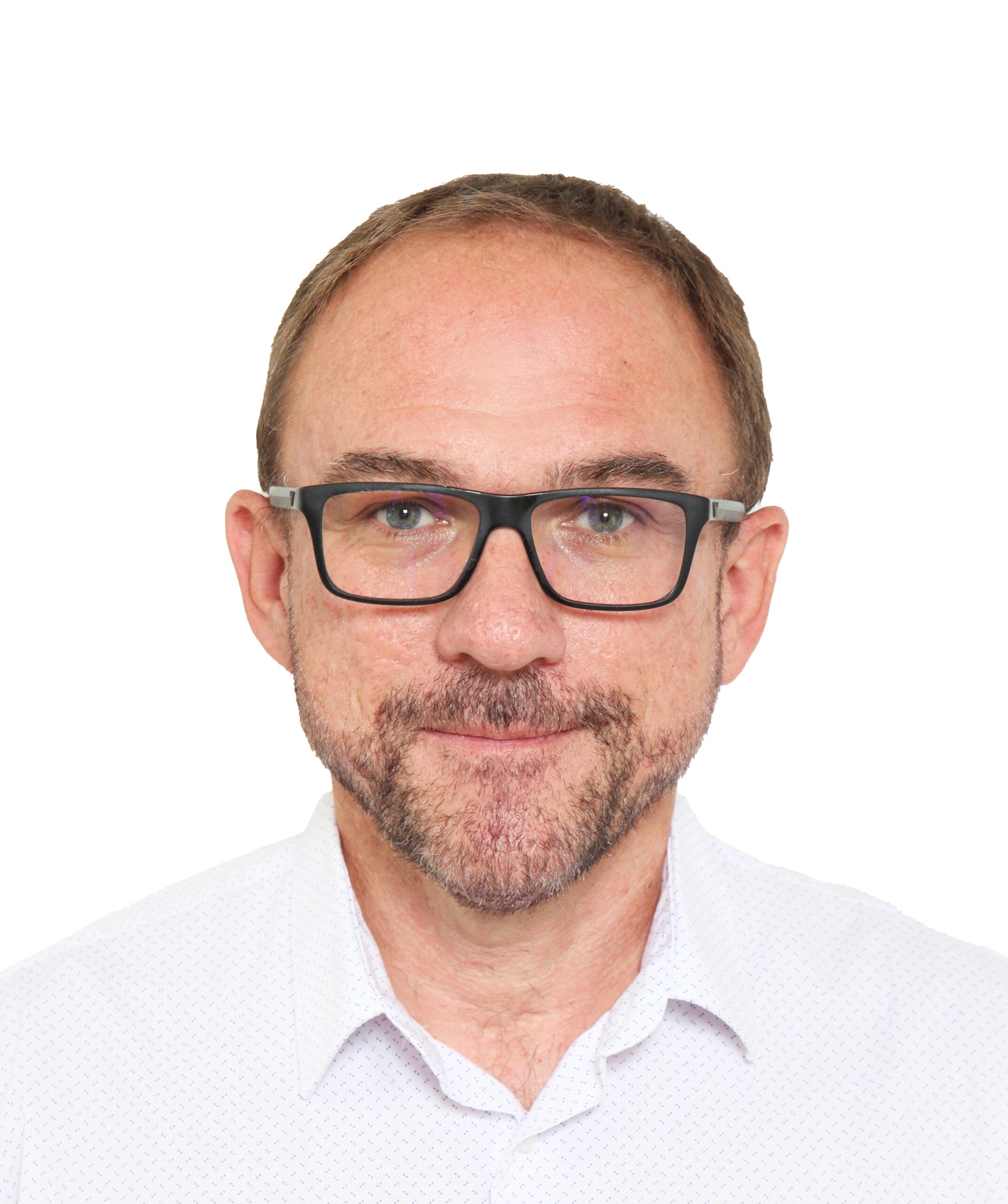
Looking back on more than half a century of life, I am grateful for all the circumstances that have shaped me, even the unpleasant and ugly ones. I was born on 23 March 1974 in Karlovac, where I spent my childhood. Due to a series of unfortunate events dating back to the Second World War, both my mother and I grew up in the home of the old Karlovac Katzler family. This Austrian family had established itself in Croatia as early as the Austro-Hungarian era and had been involved in floristry since 1830.
I can only guess at how much this shaped my life. If you thought that working in a florist’s shop from a young age influenced my love of plants, you would be wrong — that is not even close to being the most important legacy.
The flowers in the greenhouses in winter needed constant care, like little children. I would wake up at four in the morning to tend to them. I had the most pocket money of any of my friends because I earned it by making wreaths and cycling them to cemeteries that were sometimes more than ten kilometres away. I must admit that I still marvel at younger generations who complain about being overloaded with schoolwork. I used to steal time from my job at the florist to do my homework.
The second legacy is my fascination with human interactions and behaviour. Florists’ shops are places where lovers look for bouquets of flowers for weddings and to decorate homes, but they are also places where people go to buy flowers for funerals. It was at funerals that I learnt layered life lessons, ranging from genuine grief to pretence. My aunt Vava, whom I worked with, once said of a woman: ‘She was saved by her husband’s death.’ Of another: ‘They truly loved each other.’ Of a third, she said, “He faked his tears.” These comments prompted me to look beneath the surface of human behaviour, including my own.
The third legacy is wisdom. Having grown up with Aunt Vava and her mother, Rosalia, I heard stories that carried a century or more of memories. Stories of happy events, but also of difficult times during the great wars.
Aunt Vava always encouraged me to learn, believing in me and the knowledge I would acquire. She took pride in all my educational achievements. Although that upbringing had its hardships and I learnt lessons that may not have been age-appropriate, I wouldn’t change that experience for anything.
In 1992, I enrolled on a medical biochemistry degree course at the Faculty of Pharmacy and Biochemistry. It was not a pleasant time; it was wartime, and I envied my fellow students who could afford to eat regularly in the student canteen while I ate tinned food donated by Caritas and the Red Cross.
After completing my four-year degree, I decided to enrol on a pharmacy course as well because, at the time, medicinal chemistry was a profession with very few employment opportunities. Some of my fellow students were literally starving, and pharmacy was a promising career back then. I took the opportunity to pursue my interest in science by working on my dissertation for two years under the supervision of Blaženka Grahovac and the entire team at the Croatian Institute of Transfusion Medicine. It was there that I took my first steps in the laboratory. I graduated with a thesis on the molecular determination of the Borrelia burgdorferi sensu lato species in clinical samples. I am also grateful to my second mentor, Professor Marica Medić-Šarić, for her almost maternal support and for helping me achieve my first scientific publication. Working in a laboratory while studying was not easy. One of the subjects I had to take was botany. I was incredibly fortunate to learn botany from Ivan Šugar, one of the most erudite scholars in our region. He first took me to Velebit Mountain, placed the plant Melilotus officinalis in my hands, and began telling me a story dating back to ancient Rome. His fluency in French and Latin, and the way he told stories about plants, made him a role model. Unfortunately, I got the lowest mark in the exam. However, I am proud of it, and of the lesson it taught me about what failing truly means.
In 1998, I graduated with a Master’s degree in Pharmacy and a degree in Medical Biochemistry.
That same year, I briefly worked as an assistant at the Department of Organic Chemistry at the Faculty of Pharmacy and Biochemistry. I was then employed at the research institute of the company PLIVA, which had sponsored me for two years. I am grateful to PLIVA and its scholarship. Thanks to it, I was able to eat more regularly in the better-quality student canteen and help my mother, who had been unemployed for too long.
I then began working as a researcher in a group led by Dr Mladen Merćep, researching new anti-inflammatory drugs. I am grateful to Dr Merćep and all my colleagues for everything I learned about science — there was a great deal to learn. It was a different era from today’s highly specialised one. I had the opportunity to work in numerous areas of biomedical science. While working in an industrial setting brings significantly more funding for projects, it also restricts publications. For this reason, I currently have more patents than scientific papers to my name. I learnt a great deal from my own mistakes, as well as from those of the corporation and the profession. I was not even aware that all this experience was preparing me for my current role, which involves sharing knowledge and experience with younger generations. At PLIVA, I directed a research programme and later became head of cell biology at GlaxoSmithKline (GSK). My research in the pharmaceutical industry led to my doctorate in pharmaceutical sciences, with a dissertation titled “Macrolide-Glucocorticoid Conjugates as a New Class of Anti-inflammatory Drugs.”
Working in the corporate world was a typical love-hate relationship. You encounter various types of managers, rushed and pointless tasks, and meaningless projects, but you also experience small successes and a sense of camaraderie with colleagues. Many of the relationships I formed back then are still going strong today. I occasionally run into them when work or a chance encounter brings us together, and we realise how much we have all learnt, not just scientifically.
By the time I enrolled on an aromatherapy massage course in 2001, I had already been working in research for three years. This rekindled my old interest in essential oils and medicinal plants. I somehow managed to balance both worlds for a very long time. I am grateful to my employers, who not only tolerated my interest but also encouraged me. My overall impression was that the world of medicinal herbs and essential oils is chaotic compared to the strictness of the pharmaceutical industry, whether one likes that statement or not. I saw potential in the field that needed development, and I have never given up on it.
It’s no secret that I have explored the alternative and New Age movements in great depth. I was fascinated by the metaphysical world. For example, I thought I could see prana as tiny specks in the blue sky, not just the ordinary Scheerer phenomenon. While the alternative and New Age movements offered some valuable teachings, they also left me feeling bitter and betrayed when I woke up in 2012. In hindsight, I wondered why I hadn’t seen the truth more clearly earlier, which was brutally different from the rosy haze of false love, altruism and optimism. After leaving the pharmaceutical industry, I tried my hand at private enterprise and learnt first-hand about all its pitfalls and the balance between costs and revenue. My awakening coincided with a more realistic view of the world, and I am grateful for all the difficult moments – if everything had been perfect, I would not have transformed. In the ‘Ethics and Communication’ section, I share numerous stories that emerged from this process, and that helped me grow as a person.
Thanks to a friend’s invitation, I applied for a position at the Institute of Immunology, first working in the transfusion medicine department in 2011 before taking on leadership of the quality control department. I had to quickly master GMP inspections, human plasma-derived medicines, antitoxins, and vaccines. The job was demanding, but I am proud of what I achieved; I learned a great deal in that vast field, and it prepared me for the future. After a few years, I left due to the unsustainability of outdated production methods. Of all my jobs, it was the one I was most sorry to leave. I believe it was then that I matured professionally. My knowledge of the field would later earn me enemies when I wrote about it. Clearly, the field irritates a certain part of online hating culture on social media, but I had already encountered haters in the field of medicinal herbs from some members of that community. It was nothing new to me.
Atlantic Farmacia, a chain of pharmacies and specialist shops, opened the door to collaboration. I have been advising patients there for many years – a job which, in my opinion, is the fundamental role of a pharmacist in a pharmacy. Knowledge of plants and micronutrition is meaningless without real-life experience. After leaving the Institute of Immunology, I spent the next few years training, consulting and conducting consultations for companies. I also started writing on social media. I don’t know what to call them – some would say they are popular science stories, but they were also an exploration of the emotional landscape of my soul and my relationship with the scientific principles of the biomedical profession.
One book was published, followed by the second. They have both long since sold out, and I am grateful to people for their interest and trust. They recognised that behind the dry concepts of medicine and plants lie personal stories, emotions, highs and lows, and disappointments. This style became familiar to many people; some love it, and some don’t, and that’s perfectly fine.
Everything changed when I was hired to create a new pharmaceutical botany programme for the newly established pharmacy degree at the University of Rijeka. Gradually, I became an external collaborator and then a permanent lecturer.
It was there that I realised my life’s purpose. I often found myself self-critical about my changing jobs and interests, but then I realised that it all made sense: to younger generations, I could pass on not just structured knowledge but also experiences and emotions. In the age of artificial intelligence, it will be more important for the younger generation to develop their character than their knowledge. This will be crucial. Moving to Rijeka changed my life for the better in many ways, aligning with my desire to bring all the different parts of my life together into a new, unified whole. I am grateful for this opportunity and for my students, who consistently give me good feedback. I am happy to have chosen the path back to science again.
Above all, I love hiking. It is where my soul is happiest. I prefer to go alone, but sometimes I take people with me.
In the future, I hope to have more time to provide botanical education through hiking. Anyone who knows me knows that I love the French language and have long wanted to study it. I also speak English, which is why I have finally set up Plantagea in three languages.